The world's big global bodies split the work of collective problems. The United Nations gives every state a forum and a security machinery. Alongside it sit two specialists. The World Health Organization sets health standards, while the World Trade Organization writes the rules of trade. Most of these bodies coordinate and cajole. Almost none can command.
The map is older than it looks. The United Nations runs on six main bodies, all created under its charter in 1945. The World Health Organization, founded in 1948, counts 194 member states. The trade body came last: the WTO was born in 1995 out of the GATT system. For related coverage, see The WTO's Supreme Court Has Been Vacant for Years. Trade Law Improvises.
What Does the UN Do?
When readers ask what does the UN do, the plainest start is the General Assembly. All 193 member states sit there, which makes it the only UN body with universal representation. Each September the full membership meets in New York. Decisions on peace or budget questions need two-thirds majorities.
The Secretariat supplies the machinery. It is led by a secretary-general, the organization's chief administrative officer. The assembly makes that appointment on the council's recommendation, for a five-year, renewable term. Staff work in duty stations and peacekeeping missions around the world.
Why Does the Security Council Work Differently?
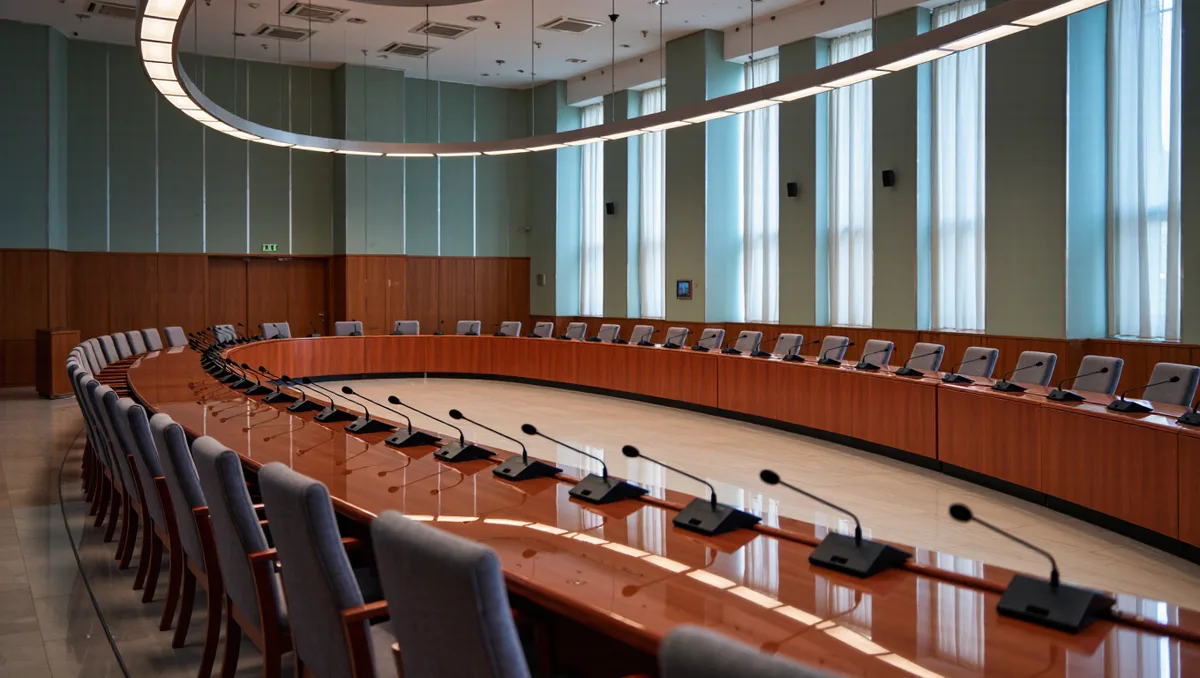
Because the charter gave it teeth nobody else holds. The council carries primary responsibility for international peace and security. It has 15 members: five permanent and ten elected. Its decisions bind: under the charter, all member states are obligated to comply with them.
That chamber can impose sanctions and even authorize the use of force. The permanent seats are a design of 1945, when the organization and its charter were written. The ten other seats rotate through elected terms, and the council's presidency changes every month.
Where Do Global Health Rules Come From?
Mostly from Geneva. The World Health Organization was founded in 1948. It is the United Nations agency charged with promoting health across borders. It works with 194 member states across six regions. It also directs and coordinates the world's response to health emergencies.
Its toolbox is standards and coordination rather than armies. The International Health Regulations sit in its rulebook. Its Triple Billion targets set measurable goals for global health. When a disease outbreak crosses a border, this is the mechanism governments built for that moment.
Who Writes the Rules of Trade?
The World Trade Organization calls itself the only international body dealing with trade rules between nations. Its agreements are negotiated and signed by the bulk of the world's trading nations. Members then ratify them in their own parliaments. Its stated goal is to use trade as a means to improve living standards. The same founding text calls for promoting sustainable development.
That design makes trade rules different in kind. Members sign contracts, not aspirations, and the rules arrive with their own machinery attached. The system predates the institution. It grew from the General Agreement on Tariffs and Trade, then took its current form in 1995.
Can Any of These Bodies Command a Country?
Only one can, and only sometimes. The Security Council's decisions bind every UN member under the charter. The General Assembly recommends. The WHO coordinates, and the WTO referees agreements that its own members wrote. The International Court of Justice is seated at the Peace Palace in The Hague. It settles legal disputes that states submit to it. We covered a connected angle in When the Security Council Blocks, the General Assembly Pushes Back.
Power, in short, was never given away. It was pooled on purpose, in doses each treaty fixed in advance.
Conclusion: Who Holds the Power?
Member states do. Every body described here was created by treaty among governments. Each is strong exactly as far as its members allow. The alphabet soup is not a world government; it is a contract with limited partners.
The Security Council is the exception written into the 1945 design. Its orders are the ones every member must obey. Everywhere else, sovereignty stays home.