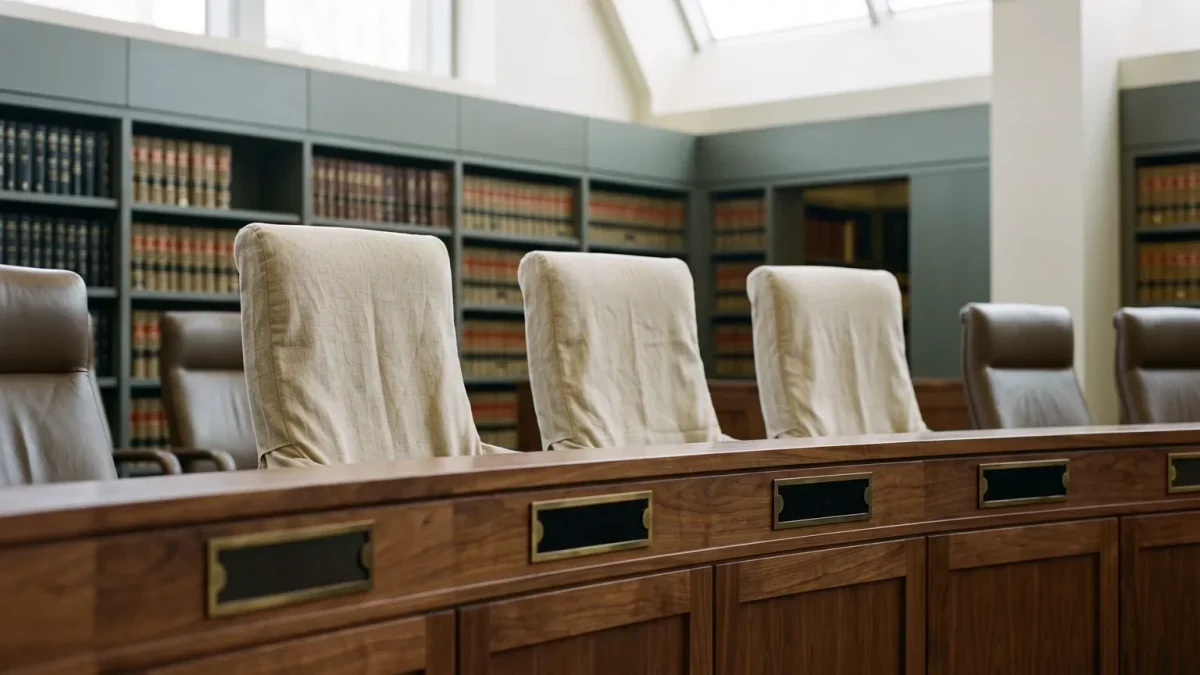
The World Trade Organization's Appellate Body — the seven-member court that gave WTO rulings binding finality — has been unable to hear appeals since December 2019, when the United States, blocking all new appointments under both administrations, let the panel fall below the three members needed to function. The consequences are structural: a member that loses a dispute panel ruling can now appeal 'into the void,' a procedural purgatory where rulings exist but never become final, and the trading system's crown achievement — compulsory, enforceable dispute settlement that even great powers obeyed — runs on improvisation. Per the WTO's own statistics, dispute filings have declined from their 1990s-2000s peak, and the appeals-into-the-void docket has accumulated dozens of cases in legal limbo, a court calendar with no courtroom.
Why did the US break it?
Grievances accumulated over two decades and both parties. American administrations of both parties argued the Appellate Body overreached — issuing advisory opinions nobody requested, treating its reports as binding precedent against the understanding that they bind only the parties, ruling on issues like the meaning of 'public bodies' in ways Washington believed exceeded the mandate, and exceeding the 90-day deadline habitually. The 2018-2020 escalation layered economics atop jurisprudence: a trade-war worldview in which binding adjudication constrained US tariff actions — including the steel-and-aluminum national-security tariffs appealed and defended precisely on the ground that security justifications are unreviewable, a position the blocked system conveniently never got to test. The blocking continues because it works: an appellate court that cannot convene cannot rule against you.
What is the MPIA workaround?
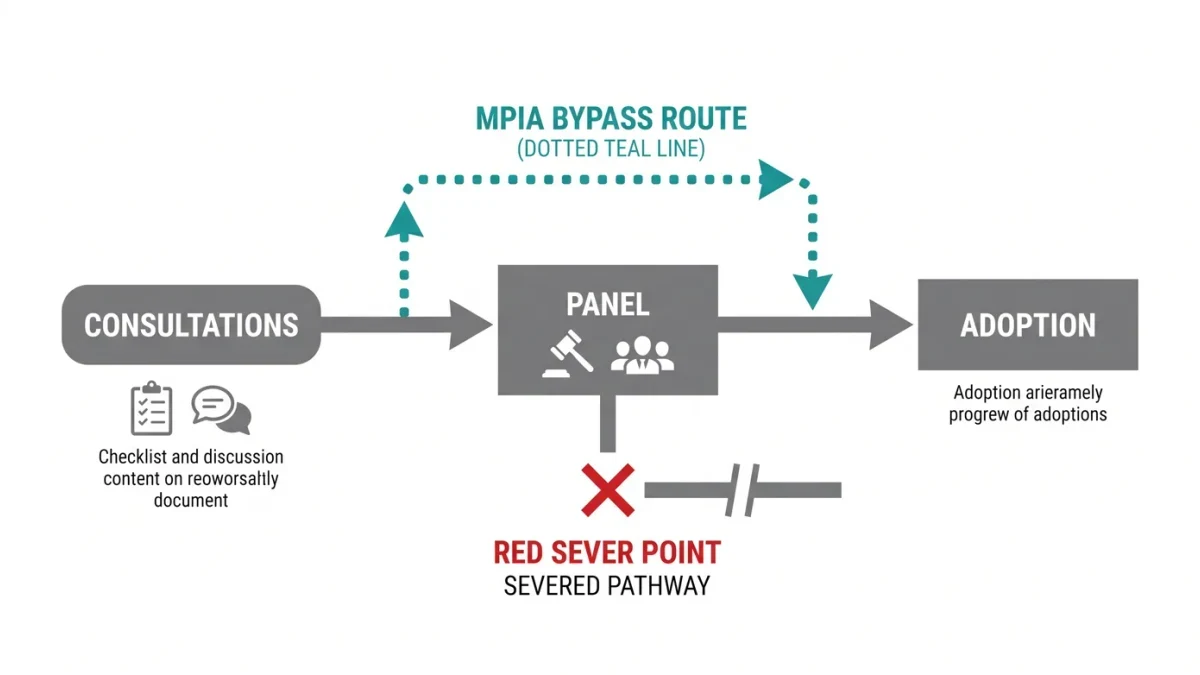
The Multi-Party Interim Appeal Arbitration Arrangement — a 2020 ad hoc substitute built inside Article 25 of the dispute-settlement understanding, under which some two dozen members including the EU, China, Canada, Brazil, Japan and Australia agreed to arbitrate appeals among themselves using former Appellate Body members as stand-in judges. Cases have been decided through it — the EU winning poultry and other disputes against Brazil, mixed outcomes elsewhere — and it keeps binding settlement alive for its participants. Its limits are the story: the US is not a member, so disputes involving Washington end in the void or settle by leverage; the arrangement is by its name interim; and its arbitration awards bind only the parties, a doctrine quietly renouncing the precedent-function whose overreach America originally protested. Trade law between the great blocs now runs on a two-tier system: rules-based adjudication among MPIA friends, power-based bargaining with everyone else's appeals hanging.
What replaces binding rulings in practice?
Self-help, layered by size. The EU built autonomous enforcement — retaliating under its own legislation when it deems US tariffs illegal, and weaponizing trade policy instruments that would once have been WTO-tested first. Mid-sized powers comply more than they retaliate, because market access still matters more than any single dispute. And the dispute-settlement reform negotiation — the 'reform by consensus' mandated at the 2022 ministerial and continuing through the 2024-2025 cycle with a flurry of texts on discretionary precedent and appellate timelines that concede most US demands — inches toward a restored court nobody can yet ratify. The reform paradox is exact: the member that broke the system holds the veto over fixing it, and demands as the price of return the guarantees it violated the system to obtain.
Does the paralysis actually matter for trade?
Less than feared, more than measured. World trade did not stop in 2020 — it pandemic-shrank, recovered, and reorganized around subsidies and industrial policy that the WTO's existing rules barely reach: the Inflation Reduction Act and the EU's responses, export controls on technology, critical-minerals agreements stacked outside most-favored-nation discipline. The honest assessment among trade lawyers: the WTO's crisis is less a court vacancy than a rule-obsolescence problem wearing one — the 1990s bargain of market access for policy restraint dissolving under security economics, with the empty courtroom its most visible symptom. Meanwhile the organization's other functions grind on: the 2024 accession of Comoros and Timor-Leste, committee work, the fisheries subsidies agreement's slow ratification — a secretariat keeping the lights on while the judicial wing waits.
What should readers watch?
Three dockets. The void-appeal count — each new appeal into the void measures the system's further decay. The MPIA case law — its stand-in judges are quietly writing the jurisprudence the restored court will inherit or reject. And the reform texts' fate at the next ministerial — whether a formula restoring appointments in exchange for precedent-limitation passes, or whether the improvisation hardens into the permanent constitution of a lawless appellate tier. Courts can be rebuilt; the habit of obeying them is the harder renovation, and it is renovating in real time — downward.