Export controls are government rules that decide which goods, software and technical knowledge may leave a country, and who may receive them. They work through licensing: a company that wants to sell a controlled item abroad must first get permission from the agency that governs it. In the United States, more than a dozen federal agencies share that job, and the rules reach further than most people expect — even an email sent to a colleague in another country can count as an export.
The machinery matters now more than it has in decades. Since October 2022, the United States has imposed several rounds of controls on advanced chips and semiconductor equipment sold to China, and allied governments have tightened their own rules in parallel. Understanding how the system works — what triggers a license, who enforces it, and where its reach stops — explains why a single rule change can move markets, reshape supply chains and slow a research project in a university lab. This connects to our earlier piece, Sovereign Default Has a Playbook Now. It Barely Works.
What exactly counts as an export?
The definition is broader than shipping a crate across a border. According to Cornell University's Research Services, US export controls cover commodities, technologies, software and services sent to foreign locations — and also disclosures made to foreign persons, wherever they are. That means several everyday activities are legally exports: mailing equipment overseas, carrying a laptop on an international trip, or sharing technical data with a collaborator abroad.
Physical items are treated more strictly than ideas. Cornell's guidance notes that the Fundamental Research Exclusion — a carve-out that frees openly published, non-restricted research from licensing — never covers physical goods. A prototype built from fully open research is still a controlled object in the eyes of the regulations, and shipping it abroad still requires review. The same logic applies to temporary shipments: an instrument sent overseas for a month and brought back has still been exported.
Which agencies decide, and what do they control?
The system splits by what the item is. As the Emerging Tech Policy guide to export controls explains, dual-use items — goods with both civilian and military uses, such as semiconductors, software and biotech tools — fall under the Export Administration Regulations, run by the Commerce Department's Bureau of Industry and Security. Weapons, spacecraft and defense services sit under the International Traffic in Arms Regulations, administered by the State Department. Nuclear technology is divided between the Department of Energy's National Nuclear Security Administration and the Nuclear Regulatory Commission.
Dual-use items make up most of the caseload, and they show why the system is hard to follow. A high-performance chip is a consumer product until it is wired into a missile guidance system. The rules therefore sort exports along three axes: the item, the destination and the recipient. Comprehensive embargoes — the harshest form — bar nearly everything to a handful of countries. Cornell lists Cuba, Iran, North Korea, Syria, Russia and Belarus among destinations where almost any activity needs US government approval. Readers following this should also see De-Risking: How Whole Countries Lose Access to Dollars.
How does a license actually get granted or denied?
Three kinds of controls interact. List-based controls name specific items and set licensing policy for specific countries: if your product appears on the list and the destination is covered, you apply for a license and the agency reviews it. End-use controls look at the buyer's purpose — an otherwise permissible sale can be blocked if evidence suggests the item will feed a weapons program. End-user controls target the buyer itself: Commerce's Entity List names foreign companies and institutions that require a license, often with a presumption of denial, and Treasury's sanctions programs can prohibit transactions with designated parties outright.
One tool shows how flexible the system can be. The Bureau of Industry and Security can issue "is-informed letters," which impose a license requirement on a specific company's transactions without a public rulemaking. Because they skip the usual interagency review, they let the government move quickly on a single targeted deal — quietly, and before any list is updated.
Why do the rules reach factories outside the United States?
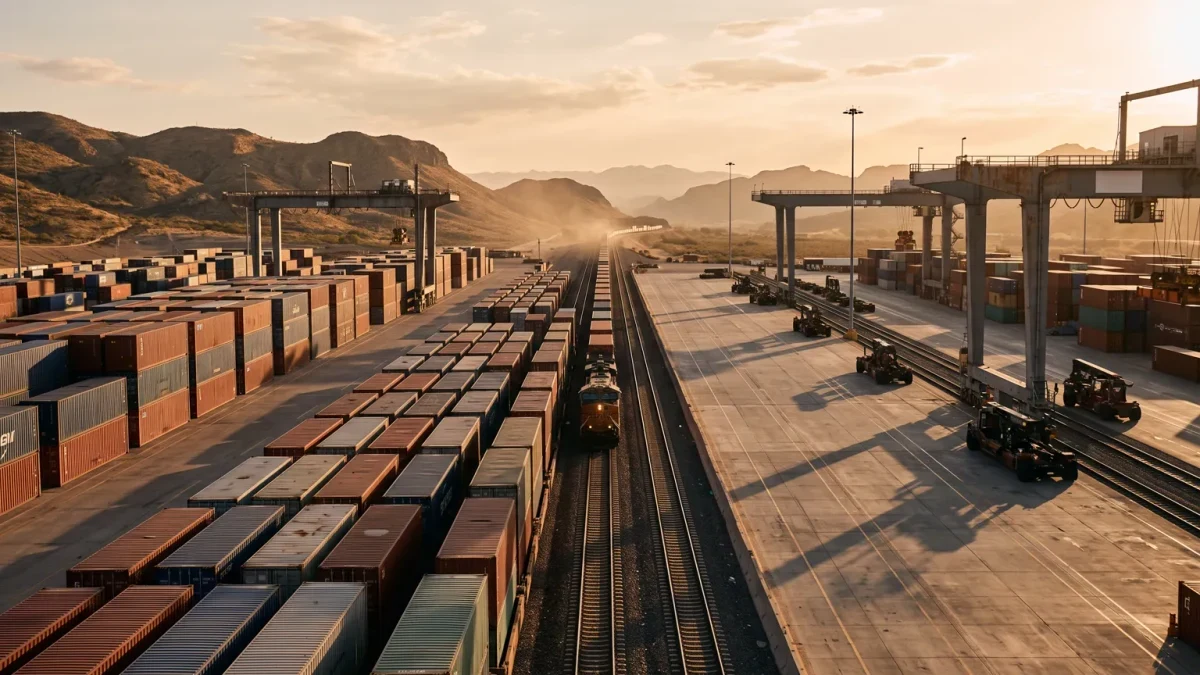
This is the part that surprises foreign manufacturers. US jurisdiction does not stop at the border. De minimis rules extend American authority to foreign-made products that contain a specified share of US content. Foreign Direct Product Rules go further: they can capture goods made entirely abroad if the production relies on US tools, software or technology. A factory in Asia that never imports anything directly from America may still need a US license to ship its output, because the machines and design tools that built the product trace back to American suppliers.
The chip controls illustrate the reach in practice. Reporting on the regime assembled since 2022 by the International Center for Law & Economics describes restrictions on advanced GPUs sold to China, on the semiconductor-manufacturing equipment needed to make leading-edge chips, and on the ability of "US persons" to support advanced fabrication abroad. Chipmakers responded by building deliberately reduced versions of their products for the Chinese market — modified parts designed to fall below the control thresholds.
Does any of this actually work?
The honest answer is that the evidence runs both ways, and the debate turns on forecasts rather than facts. Supporters argue that denying adversaries access to top-tier chips limits how much advanced AI they can run, at least in the near term. Skeptics reply that restrictions give foreign rivals years of incentive and revenue to build their own supply chains — and point to cases where production continued under controls. The same reporting records Huawei's Mate 60 Pro, built around a domestically made 7nm processor from SMIC despite Huawei being subject to some of the strictest US controls, and DeepSeek's 2025 reasoning model, which reportedly achieved competitive results with far less computing power than American labs typically use.
History offers a caution on the other side. At a 2009 congressional hearing on satellite policy, Subcommittee Chairman Brad Sherman noted that the United States was the only country controlling satellite exports as if they were armaments, a treatment adopted after a brief experiment with looser rules in the 1990s. Whether that strictness protected security or pushed customers to foreign suppliers was the hearing's central dispute — and the same trade-off between denial and competitiveness runs through today's chip debate.
What this means for companies and researchers
For anyone selling technology abroad, the practical exposure is wider than the word "export" suggests. A few points of exposure recur:
- Screening. Restricted-party lists are checked before any engagement; a single designated counterparty can freeze a deal.
- Destination and end use. Even a permissible item to a permissible country can require a license if the stated end use is prohibited.
- Travel and hand-carry. Laptops and instruments taken on international trips are exports under the rules, though travel exemptions are broader than shipping exemptions.
- Research partnerships. Open, publishable research may qualify for the fundamental research exclusion; restricted or proprietary inputs generally do not.
Export controls sit alongside the other instruments of economic statecraft — sanctions, tariffs, investment screening — but they are the most granular of the set. Where a sanction closes a whole banking relationship, an export control can turn on the specification of one chip. That granularity is the system's strength and its burden: it lets governments target precisely, and it obliges every exporter, university and foreign factory touched by US technology to know exactly where the lines sit. The lines move often, and the burden of knowing where they sit falls on the exporter, not the government.