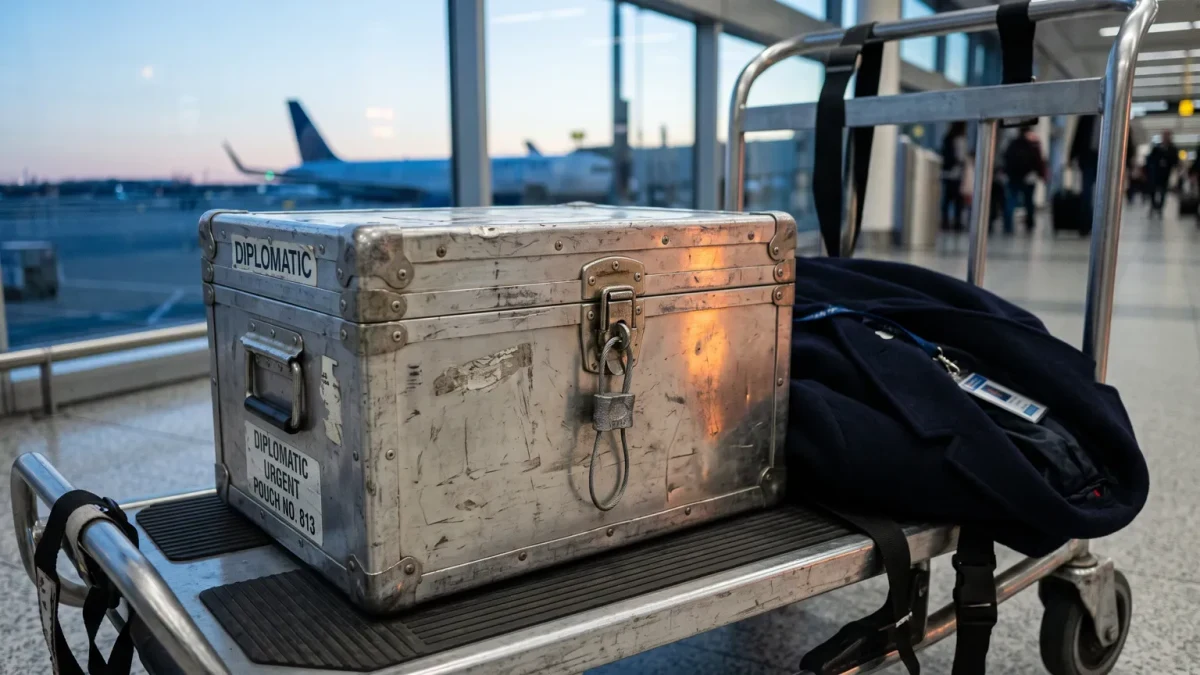
The diplomatic bag — properly the 'diplomatic pouch,' and in practice everything from a sealed courier case to a shipping container — is protected by Article 27 of the 1961 Vienna Convention on Diplomatic Relations: it may contain only diplomatic documents or articles intended for official use, it may not be opened or detained, and its courier enjoys personal inviolability while carrying it. The receiving state's only rights are suspicion in exceptional cases of abuse — the 1963 Cherif case, where a former foreign minister was drugged and shipped in a crate labeled diplomatic mail from Morocco to Paris, remains the doctrine's scandal text — and the corollary that a bag manifestly abused loses protection, though states almost never test it. There is no size limit in the text: in 1984 the UK lodged a formal protest over a 45-foot shipping container sent as Libyan diplomatic baggage, and the practice since has settled into a live-and-let-live of reasonable volume rather than treaty clarity.
What can legally travel in the bag?
Documents and official articles — a definition stretched by practice in every direction. The classic cargo: treaty texts, cipher material and one-time pads, classified briefing folders, the mission's administrative mail. The routine gray: wine and foodstuffs for official functions, medical supplies, replacement furniture — states differ on generosity. The notorious: the 1984 attempt to smuggle a person out of the UK in a crate from the Nigerian high commission, which ended the container-era tolerance; drugs and contraband in isolated scandals that ended in waivers, quiet expulsions or — where the abuse was egregious and the sender obdurate — ruptures. The smuggling of a human being is the abuse that most clearly forfeits protection in state practice, Cherif having made drugging-and-crating a diplomat's cargo into law-school legend and foreign-ministry cautionary training alike.
Who carries it, and how is it certified?
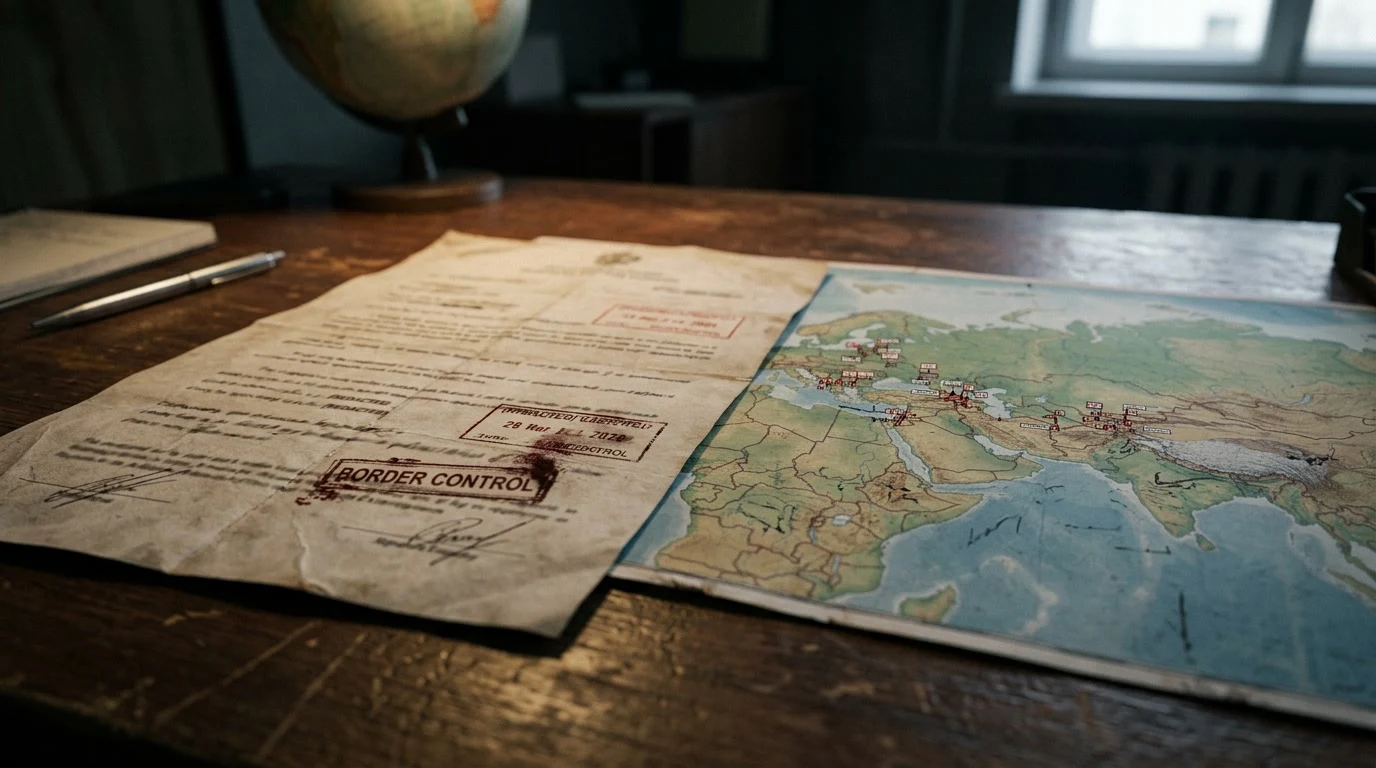
By a professional courier base — embassy drivers, defense attaché staff, the courier services several foreign ministries run as dedicated grades — or, on ad hoc occasions, by a diplomatic agent, with a dated and signed courier certificate listing only the number of packages. Couriers in transit through third states keep protection while en route, an extension the era of hub airports made routine: the courier waiting for a connection is inviolable, and so is the case chained to the wrist. The system's vulnerability is the certificate's honesty: customs services accept the declaration without inspection and largely without complaint, because the reciprocal arrangement protects their own outbound bags, and because opening another state's pouch costs more diplomacy than any seizure is worth. The security services' workaround is not opening but watching — tracking the bag's route, volume and personnel for the intelligence picture, a surveillance cat-and-mouse conducted with full legality on both sides.
Why hasn't the loophole been closed?
Because every state is a user. The bag is one of the few Vienna-framework privileges that all 193 parties exercise symmetrically, from the greatest power's weekly cipher pouches to the smallest mission's stationary resupply — and the treaty-amendment math means the abusers' cases are absorbed as incidents, not precedents. The modern pressures are real: sanctions enforcement occasionally collides with the pouch's freedom, as in the disputes over diplomatic cargo to sanctioned missions; narcotics and cash-smuggling scandals recur; and the counterterrorism era's cargo-screening norms chafe against a no-inspection rule written for letters. The settled response is procedural hardening at the margins — x-ray of the vehicles carrying bags where traffic passes, volume norms, registration of couriers — while preserving the Article-27 core that nobody proposes to reopen.
What is the bag's future?
Digitized at the edges, physical at the core. Most of what once traveled — briefing cables, treaty drafts — moves now over encrypted channels, and the cipher-material traffic has thinned accordingly; what remains irreducibly physical is the cargo that cannot be emailed: equipment, secure hardware, gifts, the occasional evacuation's papers. The bag's romance has therefore inverted: fewer pouches, higher stakes per pouch, and the courier trade consolidating into the security-cleared professional services of the major foreign ministries. Its legal sanctity will persist precisely because it is now mostly harmless and occasionally indispensable — the world's most trusted suitcase, carried under a rule everyone keeps because everyone someday needs it.