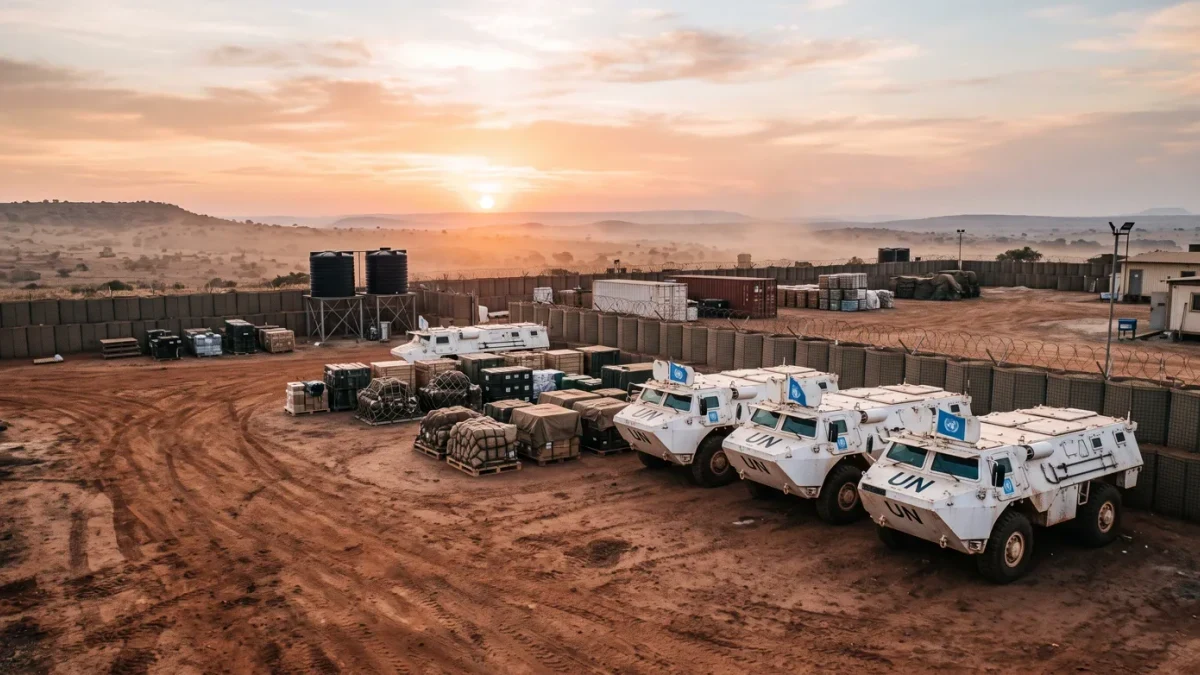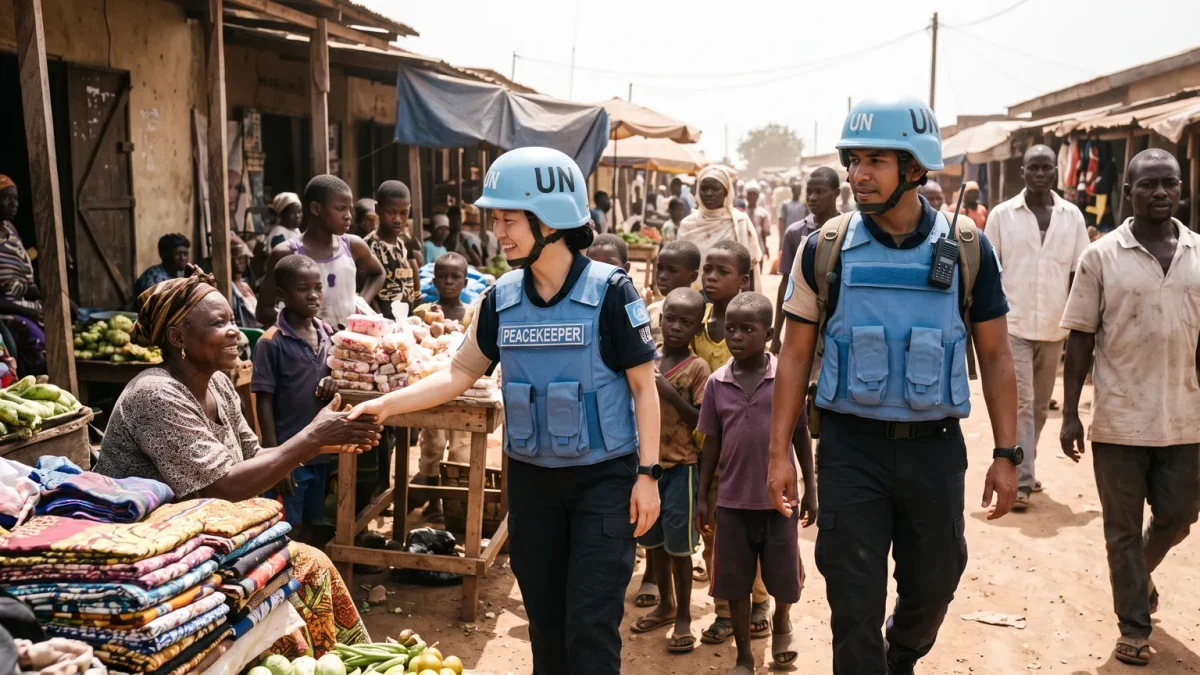
Every UN peacekeeping mission lives on a mandate — a Security Council resolution, typically renewable annually — that authorizes its troops, tasks and boundaries, and each renewal is a negotiation in which the mission's host government, the Council's five permanent members and the troop contributors each hold leverage. The UN currently runs about eleven peacekeeping operations deploying nearly 70,000 personnel with annual budgets around 5.6 billion dollars — the 2024-2025 approved peacekeeping support figure — concentrated in Africa and the Middle East: MONUSCO in DR Congo, UNMISS in South Sudan, MINUSMA wound down in Mali in 2023 after a host-government demand, UNIFIL in Lebanon renewed annually under the shadow of the 2024-2025 cross-border war it could neither prevent nor leave, and MINUSCA in the Central African Republic. The renewal calendar is peacekeeping's true political theater: missions live or exit not on battlefield performance but on whether a text can be agreed before the expiry date, and the decade's pattern — hosts demanding departure, a P5 member trimming, vetoes falling — has made the calendar the genre's suspense.
Who writes the mandate, and who can kill it?
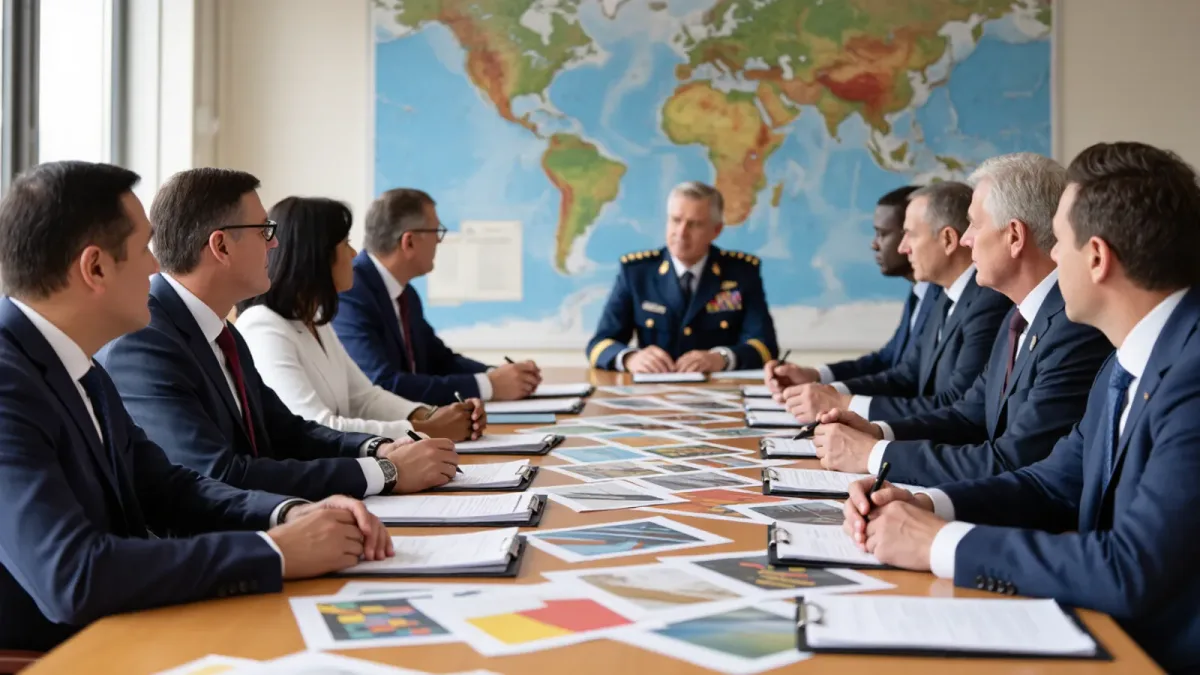
The Council drafts, and any of the five permanent members can veto. The host's formal lever is consent: peacekeeping deploys by agreement of the state on whose territory it operates, and the consent can be withdrawn — Mali's junta forced MINUSMA's 2023 exit through a withdrawal demand and deadline diplomacy; DR Congo's government, after years of friction, negotiated MONUSCO's phased acceleration of withdrawal in 2024. The troop contributors' lever is quieter — a government whose parliament objects to casualties can pull its battalion, as the withdrawal waves after the deadliest years showed — and the Fifth Committee's budget lever in New York sets the payroll reality under every resolution. Mandate drafting itself is the craft: the tasks list, the protection-of-civilians language, the reporting requirements and the ceilings are negotiated phrase by phrase, and the differences between 'all necessary means' and 'necessary measures' are jurisprudence blue helmets carry in their rules of engagement.
What does the annual renewal fight actually involve?
Three recurring contests. Scope: host governments press to trim tasks and timelines — the 2020s' accelerated-exit negotiations; human-rights advocates press to keep protection language that hosts find intrusive. Finance: the assessed-budget negotiations where the largest contributor's arrears — the United States' chronic unpaid peacekeeping bills, running over a billion dollars — meet the troop contributors' reimbursement demands, with missions budgeted at levels their own reviews call inadequate. And geopolitics: the 2020s' Council divisions put mandates through editing wars — Russian and Chinese insistence on host-consent language, Western insistence on human-rights reporting, the 2022-2025 vetoes and threatened vetoes that made even technical rollovers contested. When negotiation fails, the mission's authorization lapses — the nuclear option everyone negotiates around, exercised only at host demand, because an unplanned lapse strands troops, courts and civilians mid-mission.
Does peacekeeping work?
By its own measured evidence, better than its reputation. The academic literature — the large-N studies built on mission-level datasets since the 1990s — finds peacekeeping deployments associated with substantially reduced risk of civil-war recurrence, with larger, better-equipped multidimensional missions performing best; the failures are the famous ones — Rwanda 1994, Srebrenica 1995 — while the successes, Namibia to Sierra Leone to Liberia, rarely make headlines. The 2023-2025 files complicate the ledger: MINUSMA exited Mali without stabilizing it; UNIFIL sat between Israeli forces and Hezbollah in a war that injured its own peacekeepers; and the wave of host-government expulsions — the Sahel's Russian-aligned juntas preferring mercenaries to blue helmets — announced a demand-side crisis no mandate drafting could solve. The honest verdict: peacekeeping remains one of the most cost-effective conflict tools the UN has, currently losing clients to politics rather than performance.
What is replacing the missions that leave?
A gray market. African Union and subregional missions — from AMISOM's transition to ATMIS and the AUSSOM in Somalia — run with UN-assessed funding arrangements that the Security Council's financing debates keep provisional. Bilateral deployments and private military companies — the Wagner/Africa Corps pattern across the Sahel and beyond — offer governments sovereignty-friendly protection without human-rights conditionality, the exact trade the host juntas chose. And coalitions-of-the-willing interventions under Chapter VII ad hoc authorizations, as in Haiti's Kenya-led multinational mission, whose funding and mandate struggles are peacekeeping's next-generation case study. The UN's share of the world's peace operations market is shrinking by design of its customers, and the renewal calendar will keep registering that erosion one expiry date at a time.
What should readers watch?
The rollover votes — each contested technical extension in the Council signals the order's weather. The exit negotiations — every accelerated-withdrawal timetable is a precedent for the next host. And the arrears figure — the unpaid peacekeeping bills that quietly decide whether the missions that do get renewed can pay their troops, which is the difference between a mandate and a memory.