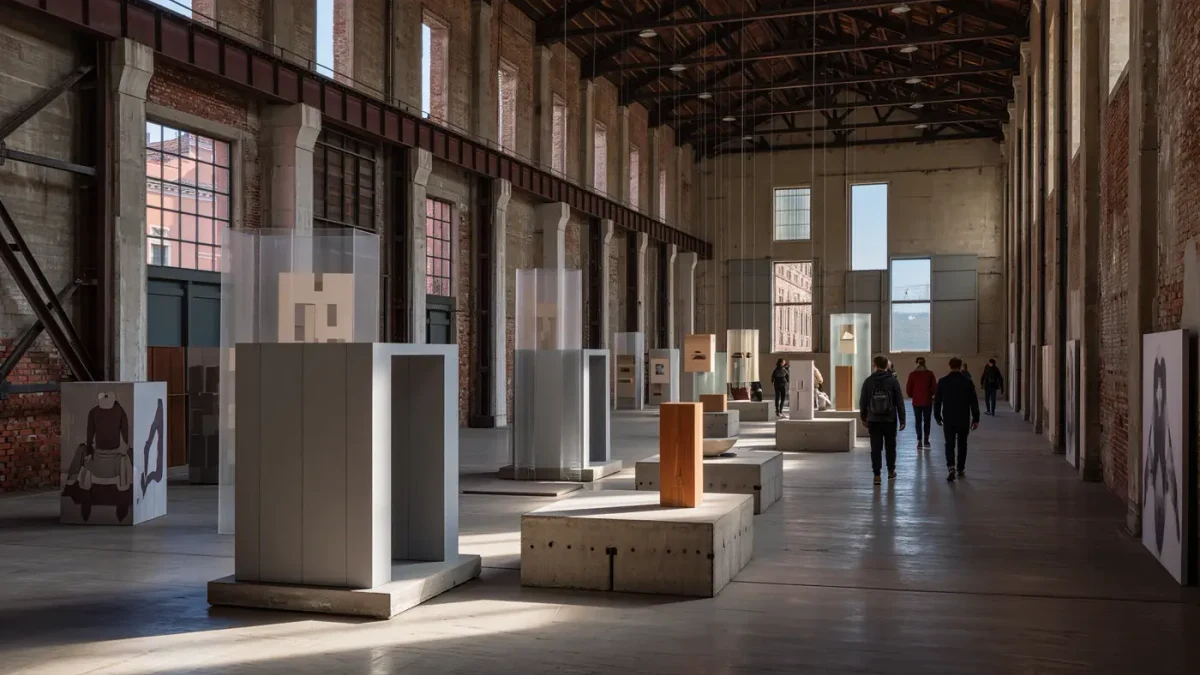
The Venice Biennale's national pavilions are exactly what they sound like: exhibition buildings in the Giardini and Arsenale complexes that belong to nation-states, not to galleries or collectors, each presenting its own curated artist in the Biennale Arte exhibitions held in alternating years. Thirty countries own permanent pavilions in the Giardini, a list frozen in the early twentieth century — Britain in 1909, Germany in 1912, followed by a rush before the Second World War closed the gate — while every other participating country rents spaces across the city, numbering ninety-plus national participations in recent editions. The result is the only art event where the exhibition list doubles as a diplomatic census: who has a building, who rents, and who is absent tells you the state of the world's recognition politics in miniature.
How does a country get a pavilion?
Two routes, both political. The historical route was real estate: states acquired Giardini plots and commissioned architects before space ran out, which is why the permanent roster reads like a 1930s atlas of great powers, with Serbia (inheriting Yugoslavia's 1938 pavilion) and Egypt's later rental-era presence marking the map's edges. The modern route is the Biennale's participating-countries process: a state submits a proposal through its ministry or arts council, receives the Biennale's approval, and finds a venue — palazzi, churches, warehouses — anywhere within the city's boundaries. Participation requires something short of full diplomatic recognition, which is why the Biennale's official lists have included entries that UN rosters do not: Kosovo has participated with its own pavilion since 2013, a fact that Pristina's diplomats treat as soft-recognition currency and Belgrade protests with regular communiqués.
Who chooses what goes inside?
Each state runs its own selection, and the domestic politics vary as much as the art. Some countries operate open competitions or ministry-appointed juries; others delegate to arts institutions; a few have seen selections overturned by ministerial fiat, which the press covers as the cultural-front page of wider political battles. The Biennale's central exhibition — the internationally curated show that anchors each edition, organized around a theme set by an artistic director appointed by the Biennale's board — runs alongside the national presentations, so every edition is two exhibitions at once: a curatorial argument chosen by one person, and a hundred answers to the question 'what does this state wish to say about itself', chosen by a hundred different politics.
Why do the pavilions read like a political map?
Because they were designed as one, and their mutations track the century. The Giardini's architecture is a walkable atlas of national self-presentation: Josef Hoffmann's austere Austria of 1934, Carlo Scarpa's sculptural Venezuela of 1954, the Nordic pavilion shared by Sweden, Norway and Finland as a glass-walled forest room. Germany and France exchanged pavilions for their 2021-2022 presentations — physically swapping buildings as a statement about European reconciliation after the world wars. When the Soviet pavilion's succession dissolved, the Russia pavilion stood closed through the 2022 and 2024 editions, its commissioner's resignation letter citing the invasion of Ukraine; Ukraine, renting as ever, staged some of those years' most-visited presentations. Golden Lions for national participation — Ukraine's Pavlo Makov won an award in 2022 — arrive with the politics visible on the label.
Is the Biennale an art event or a soft-power contest?
The honest answer is that the distinction has dissolved. Attendance across the Biennale's art, architecture, cinema, dance, music and theatre programs runs to hundreds of thousands in Venice annually — over 800,000 visits to the 2024 Art Biennale's main exhibition alone, per the institution's figures — making national presentations among the most cost-efficient acts of cultural diplomacy available to a foreign ministry. States that invest consistently, as the Nordic countries and Japan have for decades, harvest a visibility no embassy budget could buy. The counterargument writes itself: when the art becomes a delivery mechanism for nation-branding, curators start self-censoring toward the flattering, and the Biennale's own history — including the 2024 director's stated focus on outsiders and the vernacular — is partly a running argument against the pavilion system's national logic. Yet the system persists because the alternative, a curated exhibition of unattached artists, exists everywhere already. Only Venice lets the states themselves hang the pictures.
What does the pavilion map say now?
That the queue is the story. First-time national participants — from Central Asia, the Caucasus, sub-Saharan Africa and the Pacific — have been the Biennale's fastest-growing category for a decade, each debut reported as a diplomatic event in its home press. The permanent Giardini roster cannot expand; the city's rental market absorbs the rest; and every two years the map redraws itself slightly in Venice's palazzi, a census conducted in paint and poured concrete. The pavilions were built to show the world to itself through states. They still do — just with more states than the founding generation ever imagined admitting.